Washington, DC (US), July 18, 2026, BNN Web Staff: The United States has urged its citizens to reconsider travel to and through the Middle East as tensions across the region continue to rise, warning that the security situation remains highly unpredictable.
In a travel advisory shared by the US Department of State, American citizens were advised to exercise increased caution due to the possibility of sudden escalation in the ongoing regional conflict.
The department also urged those already in the Middle East to closely monitor local developments and remain alert to changing security conditions.
The advisory recommended that travellers confirm the status of their flights with airlines, as military activity and security concerns could lead to disruptions in commercial air travel.
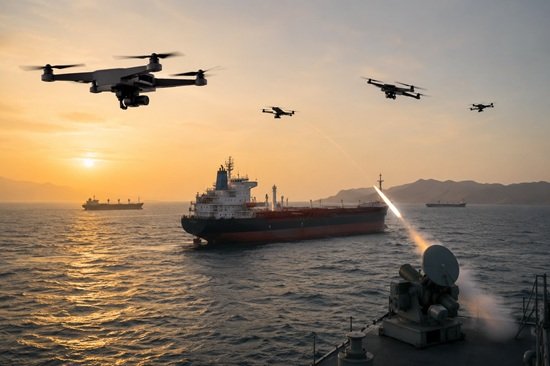
The warning comes amid an intensifying conflict involving the United States and Iran. Fresh military exchanges have been reported around the strategically important Strait of Hormuz, a key global shipping route, after efforts to maintain a temporary ceasefire collapsed.
According to reports, US forces carried out another round of airstrikes targeting Iranian military infrastructure, including surveillance facilities, logistics centres, underground weapons storage sites and maritime assets.
The US Central Command said the operations were aimed at weakening Iran’s military capabilities.
Iranian state media reported that the strikes caused significant damage to transport infrastructure in Bandar Khamir, located in Hormozgan province near the Strait of Hormuz. Damage to road and rail links is expected to affect connectivity between the port city of Bandar Abbas and central Iran.
Iran’s Energy Ministry also acknowledged attacks on parts of the country’s power infrastructure for the first time, although it did not disclose the exact locations.
Residents in southern provinces experiencing extreme heat have been advised to reduce electricity consumption.
Separately, Iranian media confirmed that a monitoring facility at Chabahar Port was struck during overnight operations.
While Iranian authorities described the site as a commercial shipping monitoring centre, the US military claimed it was part of the Revolutionary Guard’s maritime surveillance network used to track vessels in the region.
Reports of explosions also emerged from several Iranian cities, including Ahvaz, Lar, Yazd and Sirik, indicating that military operations have spread across multiple parts of the country.
The conflict has also affected neighbouring Gulf nations. Kuwait reported intercepting Iranian missiles and drones, while Bahrain activated air raid sirens following aerial threats.
In Qatar, authorities advised residents to seek shelter during missile attacks, with reports indicating that falling debris injured a child.
Kuwaiti officials also reported damage to a power generation and water desalination facility, while separate drone attacks reportedly injured military personnel stationed at defence installations.
Jordan’s military confirmed intercepting multiple incoming projectiles, and explosions were reported in Iraq’s Kurdistan region, where air defence systems engaged airborne threats near Irbil and Sulaymaniyah.
Maritime security has also deteriorated. The United Kingdom Maritime Trade Operations (UKMTO) reported that a commercial tanker passing through the Strait of Hormuz came under attack, although only minor damage was sustained and no casualties were reported.
The prolonged hostilities have significantly disrupted shipping through the Strait of Hormuz, one of the world’s busiest energy corridors.
Shipping data indicated that commercial vessel traffic has fallen sharply, while global crude oil prices climbed above USD 86 per barrel amid concerns over supply disruptions.
The Strait of Hormuz remains at the centre of the dispute, with Iran continuing to assert greater control over the strategic waterway, while much of the international community regards it as an international shipping route.