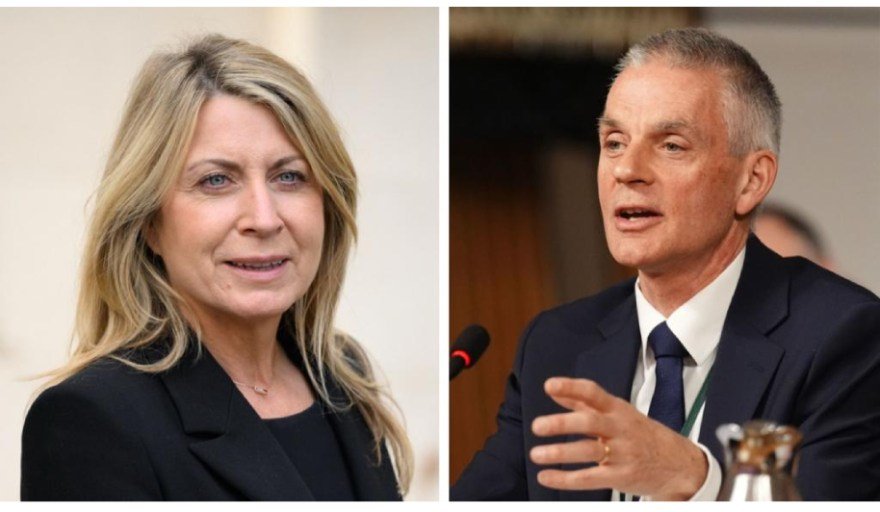
London: The British Broadcasting Corporation (BBC), the United Kingdom’s national broadcaster, is facing a deepening leadership crisis and mounting political pressure after its top executive and head of news both resigned over the editing of a speech by former US President Donald Trump.
The resignations of BBC Director General Tim Davey and News Chief Deborah Turness, which were welcomed by President Trump himself, come amid allegations of bias. Trump stated that the way his speech was edited was an attempt to influence a presidential election.
The BBC’s Chairman, Samir Shah, is also expected to issue a public apology. The broadcaster had faced criticism for its editing of a speech Mr. Trump gave on January 6, 2021, before protesters stormed the Capitol building in Washington. Critics argued that the editing for a BBC documentary was “misleading” because it cut the part where Trump told his supporters to protest “peacefully.”
In a letter to staff, Davey stated, “Mistakes were made, and as the Director-General, I must take full responsibility for that.” Turness acknowledged that the controversy over the Trump documentary was “damaging to the BBC.”
She wrote in her own staff letter, “It is vital for leaders in public life to be held fully accountable, which is why I am stepping down.” Turness added, “Mistakes were made, but I want to be utterly clear that recent accusations of institutional bias at BBC News are wrong.”
Trump posted a link to a Daily Telegraph report about the speech-editing on his Truth Social network, thanking the newspaper for “exposing these corrupt ‘journalists’.” He called them “very dishonest people who tried to influence a Presidential Election,” describing it as “a terrible thing for Democracy.”
Pressure on the BBC’s top executives had intensified after the Daily Telegraph published parts of a dossier compiled by Michael Prescott, who was hired to advise the BBC on standards and guidelines. Alongside the editing of Trump’s speech, the dossier also criticized the BBC’s coverage of transgender issues and raised concerns about anti-Israel bias in its Arabic service.
The BBC faces greater scrutiny than other broadcasters and criticism from its commercial rivals due to its status as a national institution. It is funded by an annual license fee of £174.50 (approximately $230), paid by every household with a television.
Craig Oliver, a former BBC news executive, commented that those at the top need to do a better job of defending the corporation. “We live in a fast-moving digital world where a lot of people want to target the BBC,” he said.