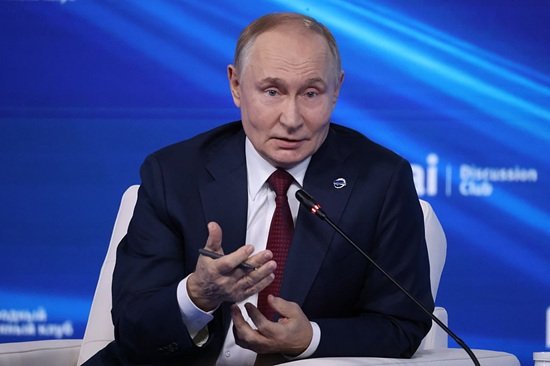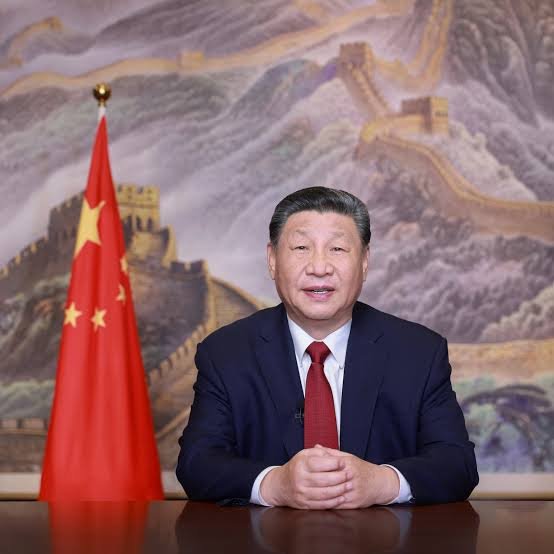
Taipei [Taiwan], October 15, 2025: China’s rapid expansion and modernization of its nuclear arsenal have raised growing concerns among global security experts that Beijing could resort to “nuclear blackmail” or even threaten nuclear confrontation in the event of a Taiwan conflict—similar to Russia’s rhetoric during its invasion of Ukraine, according to Taiwan’s Central News Agency (CNA).
During a recent military parade held on September 3 at Tiananmen Square, China displayed three advanced nuclear-capable missiles — the JL-1 air-launched ballistic missile, the JL-3 submarine-launched intercontinental missile, and the DF-61 surface-to-surface intercontinental missile.
Analysts described this as evidence of China’s emerging “nuclear triad,” the capability to deliver nuclear strikes from land, sea, and air — a capacity Beijing previously lacked.
Eric Heginbotham, a senior research scientist with MIT’s Security Studies Program, noted that China’s development of tactical nuclear weapons, such as the DF-26 missile, gives Beijing “more credible” deterrence options compared to its traditional strategic arsenal. “This not only reduces U.S. escalation dominance but also provides China with more realistic proportional responses to potential U.S. tactical nuclear use,” he said, as cited by CNA.
Experts suggest that this modernization could embolden China to engage in conventional military operations around Taiwan with less fear of nuclear retaliation from the United States.
Yang Tai-yuan, chairman of the Secure Taiwan Associate Corporation, warned that the Chinese Communist Party may have drawn lessons from Russia’s nuclear posture during the Ukraine war. “Beijing could use tactical nuclear threats to deter major powers from intervening in its regional disputes, including a potential Taiwan invasion,” he said.
He further cautioned that such nuclear intimidation might force Washington to reconsider direct military intervention, opting instead for diplomatic or multilateral measures to avoid escalation.