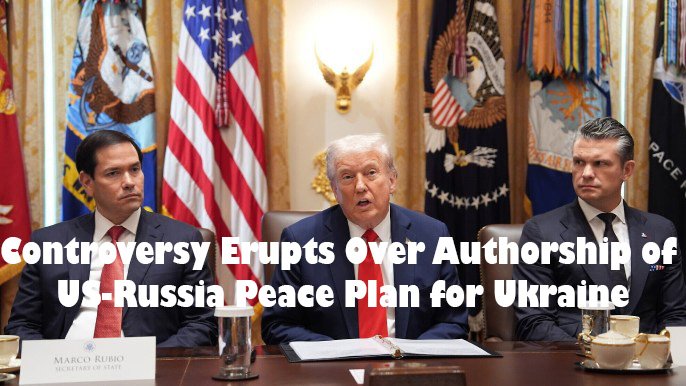
Controversy Erupts Over Authorship of US-Russia Peace Plan for Ukraine
Washington, November 23, 2025 (BNN Web Staff) – Questions are mounting over the origins of a proposed 28-point peace plan aimed at resolving the Russia-Ukraine conflict, as US politicians accuse the Trump administration of adopting a Moscow-drafted “wish list” rather than presenting its own initiative.
US Senators Challenge Administration’s Role
Critics within the US Senate, who have long voiced concerns about President Donald Trump’s handling of the Ukraine crisis, claim the plan was not crafted in Washington. In a recent briefing, they revealed discussions with Secretary of State Marco Rubio, who reportedly described the document as essentially a Russian proposal rather than an official US position.
The State Department swiftly dismissed these allegations as “blatantly false.” Rubio countered that the senators had misunderstood his comments, emphasizing that the US government was indeed responsible for authoring the proposals.
The plan’s content has stunned observers with its apparent favoritism toward Russia, prompting Republican Senator Mike Rounds to declare at a security conference in Canada: “This administration was not responsible for this release in its current form. They want to utilize it as a starting point.” He added pointedly, “It looked more like it was written in Russian to begin with.”
Independent Senator Angus King echoed this sentiment, recounting Rubio’s words: The plan “was not the administration’s plan” but “essentially the wish list of the Russians.” The senators said Rubio reached out to them en route to Geneva for related talks.
Reuters reports that several US officials have corroborated these doubts, noting the plan includes elements previously rejected by Rubio. They claim neither he nor the State Department had prior knowledge of its details before its public unveiling, fueling widespread confusion about its true architects.
European Skepticism: Tusk Demands Clarity
The controversy has rippled across the Atlantic, with Polish Prime Minister Donald Tusk publicly questioning the plan’s provenance. In a post on X (formerly Twitter) on Sunday, Tusk wrote: “It would be good to know for sure who is the author of the plan and where was it created.”
Rubio responded firmly on X, asserting: “The peace proposal was authored by the US… but it is also based on previous and ongoing input from Ukraine.”
Adding to the mixed signals, Sergei Markov—a former adviser to Russian President Vladimir Putin—denied Moscow’s involvement in an interview with Sky News. He called the plan “American” and praised it as a “very good basis for diplomatic negotiation.” Markov acknowledged “some positive moods in Russia about it” but accused Europe and Ukraine of prolonging the war, despite Russia’s unprovoked full-scale invasion in 2022.
Behind-the-Scenes Meetings Raise Eyebrows
Multiple sources familiar with the matter reveal that American special envoy Steve Witkoff and Trump’s son-in-law Jared Kushner met with Kirill Dmitriev in Miami at the end of October to refine the proposals. Dmitriev, a close Putin ally, was sanctioned by the US in 2022 over Russia’s aggression in Ukraine.
Trump Softens Stance Amid Backlash
Initially, President Trump demanded Ukraine accept the plan by Thursday, but he has since tempered his rhetoric. Now, he describes it as a negotiation starter rather than a non-negotiable final offer.
The document demands significant concessions from Kyiv, including territorial cessions to Russia, a pledge against NATO membership, and the surrender of certain advanced weaponry. Ukrainian President Volodymyr Zelenskyy has stopped short of outright rejection, stating he will not compromise Ukraine’s core interests. For his part, Putin has hailed the plan as a viable foundation for ending the conflict.
Senate Leadership Voices Doubts
The skepticism extends to key congressional figures. Republican Senator Roger Wicker, chairman of the Senate Armed Services Committee, labeled the initiative “this so-called ‘peace plan'” and warned: “It has real problems, and I am highly skeptical it will achieve peace.”
As diplomatic efforts intensify in Geneva, the authorship dispute threatens to undermine fragile trust among allies, leaving the path to peace more obscured than ever.