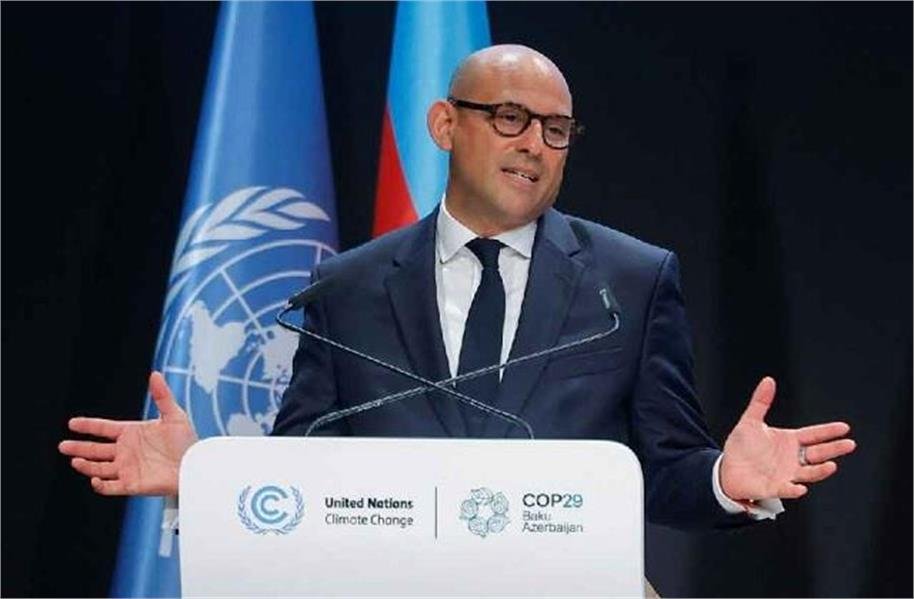
Belém, Brazil – UN Climate Change Executive Secretary Simon Stiell opened the COP30 summit on Monday with a blistering wake-up call: the world has bent the emissions curve downward since the Paris Agreement, but “we are nowhere near safe”. Speaking at the mouth of the Amazon River, Stiell warned that failure to accelerate deep cuts in emissions and build resilience will trigger catastrophic economic, social, and political fallout.
“The emissions curve has turned downward… but I’m not sugar-coating it. We have a mountain of work ahead,” Stiell declared. “Science is clear: we can and must return temperatures to 1.5°C even after a temporary overshoot. Lamenting is not a strategy. We need solutions.”
Double Down on Speed: Emissions & Resilience
In his keynote, Stiell urged nations to move “very, very fast” on two parallel tracks:
- Slashing emissions at unprecedented speed.
- Building resilience against escalating climate disasters.
“When mega-droughts wipe out national harvests and food prices soar, economic or political hesitation means nothing.” “When famine forces millions to flee, infighting will never be forgotten.”
Using the Amazon as a metaphor, he called for the COP process to flow like the river’s thousands of tributaries—driven by multiple streams of cooperation, not isolated national pledges.
Clean Energy Revolution Is Here — Now Act on It
Stiell highlighted explosive progress in renewables:
- Solar and wind are now the cheapest electricity source in 90% of the world.
- 2025: Renewables overtook coal as the top global energy source.
- Global clean energy investment now doubles fossil fuel spending.
He urged COP30 negotiators to:
- Phase out fossil fuels decisively.
- Deliver a just economic transition.
- Scale adaptation and technology deployment.
On finance, he invoked the Baku-to-Belém Roadmap:
“We’ve agreed to at least $300 billion in climate finance. Now we must start moving toward $1.3 trillion.”
A Summit Under Siege: Geopolitics, Wars, and U.S. Retreat
COP30 unfolds against a turbulent backdrop:
- U.S. withdrawal from the Paris Agreement under the incoming administration.
- Reevaluation of climate pledges by developed nations amid energy security fears.
- Ongoing wars and U.S. tariffs fueling economic uncertainty.
This makes a fair, ambitious outcome at COP30 a make-or-break test for multilateralism.
Next Deadline: New NDCs for 2031–2035
Countries must submit next-generation Nationally Determined Contributions (NDCs) at COP30. India is expected to present:
- Updated 2035 emissions targets.
- Its first National Adaptation Plan.
The Grim Math
- Current warming: +1.3°C above pre-industrial levels.
- Current trajectory: 2.8°C by 2100 (UN Emissions Gap Report).
- To stay under 1.5°C:
- Emissions must peak by 2025.
- Cut 43% by 2030, 57% by 2035 (from 2019 levels).
IPCC Chair Jim Skea: Due to years of delay, “the required cuts are now even steeper.”
Stiell ended with a rallying cry:
“This is not a drill. The solutions exist. The clean energy transition is profitable. The only question is: will we act in time?”
COP30 in the heart of the Amazon is now a defining moment — not just for climate, but for global cooperation in a fracturing world.
Stay tuned for live updates from Belém.