Ground Report: Conflict Between Israel-USA and Iran Enters Third Week
Jerusalem: March 16, 2026
The war involving Israel and the United States against Iran has entered its third week. Dozens of Israeli and American fighter jets are conducting daily sorties into Iran, carrying out heavy bombardments. To date, more than 6,000 bombs have been dropped on Iranian territory. Both nations are utilizing cutting-edge AI technology and high-precision weaponry for these operations.
However, Iran is not backing down. Tehran has retaliated by launching over 50 rounds of missile strikes targeting Israel and various interests in the Gulf nations.
The Duration of the Conflict
Israel has signaled that the current phase of the war could last at least another three weeks. Simultaneously, preparations are underway for the possibility of a much longer confrontation. Amidst this, a primary question resonates globally: How much destruction is actually occurring within Israel?
The Reality of War: A Historical Perspective
The straightforward answer is that in war, no side can be entirely shielded from loss. History and epics bear witness to this. In the Mahabharata, despite Lord Krishna being on the side of the Pandavas, Abhimanyu died in battle. This example serves as a reminder that war spares no one. (Determining who represents the ‘Pandavas’ or ‘Kauravas’ among Israel, Iran, or the US is a matter of perspective, not the job of a reporter.)
Effectiveness of Air Defense
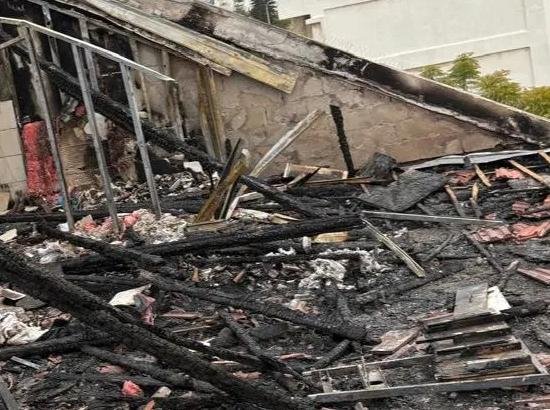
On the ground, the impact of Iranian missiles varies by location. According to Israeli defense officials and ground observations, Israel’s air defense systems successfully intercept eight or nine out of every ten missiles in the sky. In many instances, damage is caused by falling debris. However, when a missile manages to strike a target directly, the devastation is severe.
Is Destruction Being Hidden?
Claims frequently circulate on social media that the true extent of the devastation in Israel is being concealed from the world. Based on ground reporting experience, these claims do not seem entirely accurate. Journalists holding official government press credentials are generally permitted to visit affected areas with cameras.
The Role of Early Warning Systems
A major reason for the relatively low casualty count in Israel is its Early Warning System. Sirens blare well before a missile arrives, allowing residents time to reach bunkers or safe rooms. Consequently, while buildings and homes may be destroyed, the occupants often survive.
Personal Account: I met a family headed by a man named Ram. Their house was completely gutted by a missile strike, but he, his wife, and their two children survived unscathed because they had taken shelter in their bunker just in time.
The Economic Toll
While the human toll is managed through safety protocols, the most significant impact is currently visible on the economic front. Israel has faced continuous conflicts over the past four years—first in Gaza, then tensions with Lebanon, and now a direct confrontation with Iran. This has severely impacted businesses, crippled tourism, and caused military expenditures to skyrocket.
Despite the economic pressure and the constant threat of missiles, there is a visible layer of silent support for this military campaign within sections of Israeli society. Many believe that since this conflict has begun, it must be finished decisively to neutralize long-standing security threats.
While the world watches with growing concern over regional instability, there is a prevailing sentiment within Israel that the country has gained a strategic edge and is moving toward weakening a major rival. Global perspectives on this war vary, but this report is based on the tangible experiences observed here on the ground in Israel.