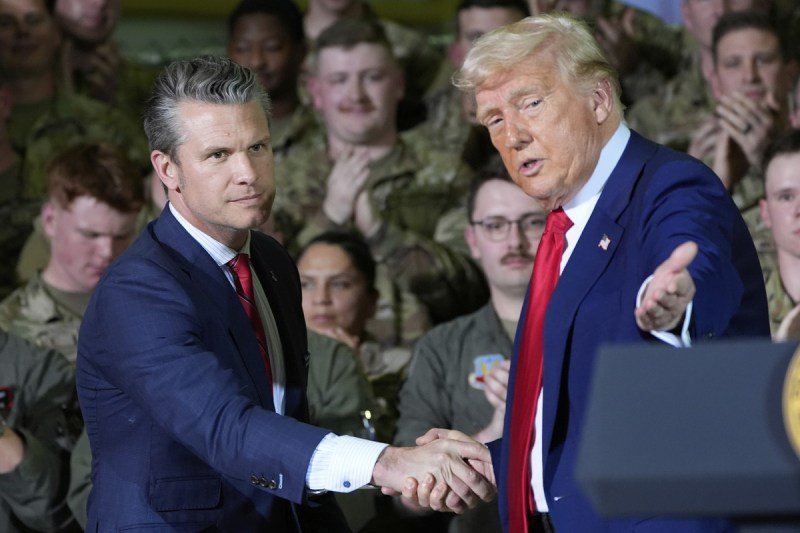
WASHINGTON — In a sweeping and largely unexplained reorganization, Defense Secretary Pete Hegseth has fired or sidelined at least two dozen generals and admirals over the past nine months, an unprecedented purge that is reshaping the Pentagon’s leadership and creating an atmosphere of anxiety and mistrust within the ranks.
The ousters, described by more than 20 current and former military officials in interviews, often run counter to the advice of top commanders and appear driven by a mix of political loyalty tests, personal grudges, and ideological opposition to diversity programs. The scale and opacity of the moves have alarmed members of Congress and former officials, who warn it is damaging military morale and eroding the institution’s non-political tradition.
A Litmus Test of Loyalty and Ideology
Secretary Hegseth’s personnel decisions have consistently followed several clear, if unofficial, patterns:
Targeting the “Milley Circle”: The promotions of at least four senior officers have been delayed or canceled because of their previous work for Gen. Mark Milley, the former Joint Chiefs chairman whom President Trump repeatedly accused of disloyalty. This includes Maj. Gen. James Patrick Work, a highly decorated officer who led the victory over ISIS in Mosul but now remains in professional limbo.
Cracking Down on DEI and Social Issues: Officers have been removed for past support of Diversity, Equity, and Inclusion (DEI) initiatives. Rear Adm. Milton Sands, commander of the Navy SEALs, was fired after pushing for female instructors in SEAL training. Rear Adm. Michael Donnelly saw his nomination to lead the 7th Fleet withdrawn after a right-wing media report highlighted a single drag performance during a shipboard talent show years earlier.
Punishing Candid Military Assessments: Leaders who offered assessments contradicting the administration’s public statements have been forced out. The head of U.S. Southern Command, Adm. Alvin Holsey, stepped down abruptly after questioning deadly strikes on suspected drug boats. Lt. Gen. Jeffrey A. Kruse was removed from the Defense Intelligence Agency after his agency cast doubt on Trump’s claim that airstrikes had “obliterated” Iran’s nuclear program.
“Squandering an Enormous Amount of Talent”
The purge has swept up some of the military’s most combat-tested leaders, including Lt. Gen. J.P. McGee, a veteran of 10 war zone deployments. The moves have left even administration officials puzzled, as in the case of Gen. James J. Mingus, the Army’s vice chief of staff, whose retirement was announced hastily without input from senior Army leaders.
Kori Schake, a defense specialist and former National Security Council official, acknowledged that a new administration has the right to appoint trusted leaders but expressed deep concern. “They are squandering an enormous amount of talent,” she said.
The Pentagon’s top spokesperson, Sean Parnell, defended the actions in a statement, saying the “military has never been more unified” and citing Hegseth’s work to dismantle DEI programs and restore a “warrior ethos.”
A Dangerous Political Message
The personnel shifts have fed the perception of a military dividing into “pro-Trump” and “anti-Trump” factions—a dynamic that worries career officers and lawmakers alike.
In a September speech, Hegseth explicitly told hundreds of officers that the new “compass heading” was “Out with the Chiarellis, the McKenzies and the Milleys,” publicly disparaging recently retired four-star generals whom many in attendance considered mentors.
“The message being sent to those younger soldiers and sailors and airmen and Marines is that politics can and should be part of your military service,” said Rep. Jason Crow, D-Colo., a former Army Ranger. “It’s a dangerous message.”
The sentiment was echoed by Sen. Elissa Slotkin, D-Mich., a former CIA analyst, who recently described the upheaval as a “purge.” “The places where we’ve looked at these kinds of things are places like China,” she said. “I used to work on Iraq. They would do the same thing.”
While most ousted officers are likely to find lucrative jobs in the private sector, the deepest impact of the purge may be on the institution left behind—a military now grappling with the politicization of its leadership and an uncertain future. express