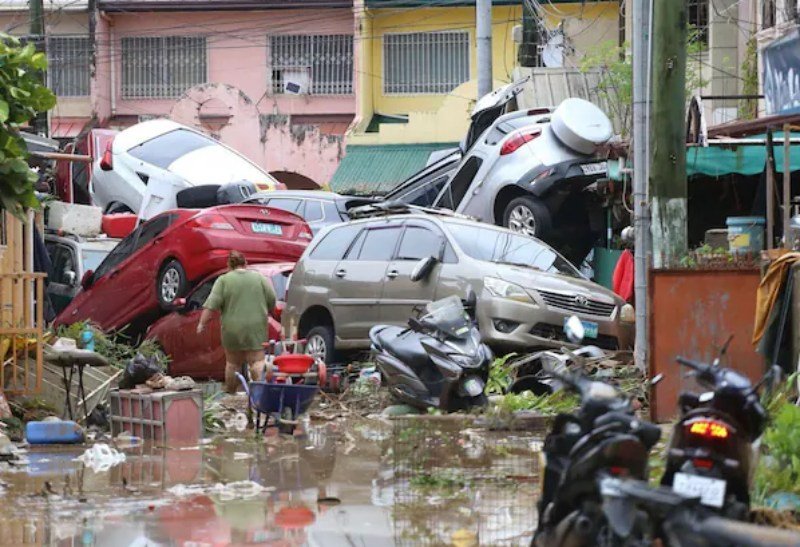
MANILA, Philippines – The Philippines is battling a dual weather catastrophe as Typhoon Fung-Wong (international name) made landfall on Sunday, just days after Typhoon Kalmaegi left a trail of destruction and claimed over 200 lives.
President Ferdinand Marcos Jr. has declared a state of emergency across affected regions, citing the “massive damage” from Kalmaegi and the imminent threat posed by the more powerful Fung-Wong.
Fung-Wong Makes Landfall with Fury
Packing sustained winds of 185 km/h (115 mph) and gusts of up to 230 km/h (143 mph), Typhoon Fung-Wong slammed into the northeastern provinces. The storm made landfall near the coast of Isabela province late Sunday or early Monday, after its effects—including widespread power outages—were already felt hours in advance.
Mass Evacuations and Travel Chaos
Authorities have undertaken massive preemptive evacuations to minimize casualties.
Evacuations: Nearly 50,000 families (approximately 250,000 people) have been moved to safer ground from high-risk villages in the coastal Bicol region.
Stranded Travelers: Over 6,600 passengers and cargo workers are stranded at at least 86 ports as the coast guard suspended sea travel.
Flight Cancellations: Several domestic flights to and from high-risk provinces have been canceled.
Kalmaegi’s Trail of Destruction
The new storm compounds the crisis left by Typhoon Kalmaegi, which has now moved toward Vietnam.
- The death toll in the Philippines from Kalmaegi has risen to at least 204.
- In Vietnam, Kalmaegi has caused at least five fatalities.
The Philippine government is now facing the immense challenge of managing relief operations for the victims of the first storm while bracing for the full impact of the second, more powerful one.