US Military Strikes Another Suspected Drug Boat in Eastern Pacific, Killing 4 Amid Escalating Scrutiny
Washington, December 5, 2025 (BNN Web Staff)–
In a bold continuation of its aggressive counter-narcotics campaign, the US Southern Command (SOUTHCOM) announced on Thursday that American forces conducted a lethal strike on a small vessel in international waters of the Eastern Pacific Ocean, killing four alleged drug traffickers. The operation, directed by Secretary of War Pete Hegseth, marks the 22nd such attack in the Caribbean Sea and Eastern Pacific since September 2025, bringing the confirmed death toll to at least 87 people across 23 vessels targeted.
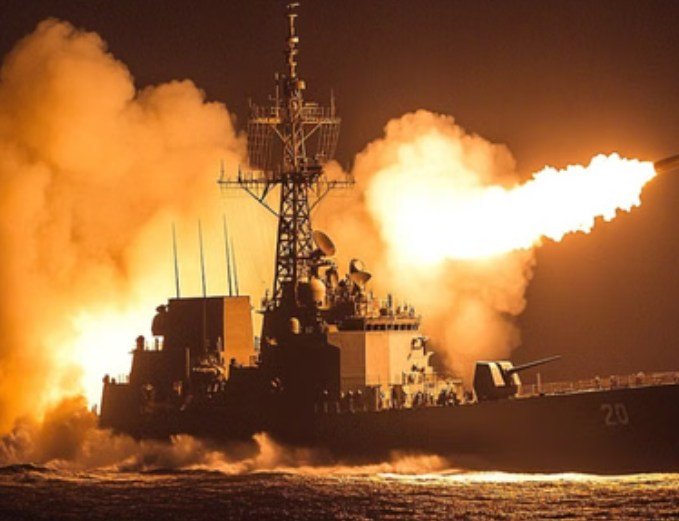
SOUTHCOM released dramatic video footage on social media showing the speedboat speeding across the waves before a sudden explosion engulfs it in flames and smoke, sinking it rapidly. “Intelligence confirmed that the vessel was carrying illicit narcotics and transiting along a known narco-trafficking route,” the command stated, alleging ties to a “Designated Terrorist Organization” involved in smuggling from Venezuela.
The strike occurred the same day as a high-stakes congressional briefing by Navy Adm. Frank “Mitch” Bradley, head of US Special Operations Command, who faced intense bipartisan grilling over the legality of the campaign’s first attack on September 2.
The Latest Strike: Part of Operation Southern Spear
Dubbed Operation Southern Spear, the US initiative targets what the Trump administration calls “narco-terrorist” networks flooding America with drugs, primarily cocaine and fentanyl precursors. Since launching in early September, the operations have:
- Destroyed 23 boats (11 in the Caribbean, 12 in the Eastern Pacific)
- Killed at least 87 individuals, including four in Thursday’s action
- Focused on vessels allegedly operated by gangs like Tren de Aragua, with purported links to Venezuelan President Nicolás Maduro’s regime
Thursday’s target was a small, open-hulled speedboat navigating a notorious trafficking corridor near Colombia and Ecuador. No survivors were reported, and the US military emphasized the vessel’s role in “threatening US national security” through narcotics flows.
President Trump, who has repeatedly branded Maduro a “narco-dictator,” hailed the strikes as essential to “saving American lives” from the opioid crisis. In a Truth Social post, he claimed each boat carries enough drugs to kill “25,000 Americans,” vowing escalation: “We will soon hit targets inside Venezuela if they don’t stop this poison.”
Venezuela’s Maduro fired back, accusing Washington of waging an “undeclared war” to orchestrate regime change. His government has mobilized defenses along the coast and appealed to the UN for intervention, calling the strikes “serial executions” of civilians, including fishermen misidentified as smugglers.
Congressional Probe into September 2 “Double-Tap” Strike
The timing of the new attack amplified scrutiny during Adm. Bradley’s closed-door testimony before House and Senate Armed Services and Intelligence Committees. Lawmakers viewed classified video of the inaugural September 2 strike in the Caribbean, where a Venezuelan-flagged speedboat was hit twice—first disabling it and killing nine, then a follow-up that sank the wreckage and eliminated two survivors clinging to debris.
Bradley, a decorated Navy SEAL with 30+ years in special operations, defended the “second tap” as lawful:
- Survivors were “actively attempting to salvage drugs” and flip the boat, posing an ongoing threat.
- No explicit “kill them all” order from Hegseth; instead, rules of engagement deemed them “legitimate targets” as “narco-terrorists.”
- The follow-up ensured the vessel wouldn’t endanger navigation and prevented cargo recovery.
Bipartisan reactions were stark:
- Republicans (e.g., Sen. Tom Cotton): “They were flipping the boat to continue the mission—exactly what we’d expect our military to do.”
- Democrats (e.g., Rep. Jim Himes): Video showed “shipwrecked sailors in distress” without communication gear—potentially a war crime under laws prohibiting attacks on helpless survivors.
Legal experts, including UN human rights officials, warn the campaign lacks congressional authorization and may violate international law by treating smugglers as “unlawful combatants” without due process. The Pentagon’s Law of War manual prohibits targeting those hors de combat (out of the fight), and no public evidence has confirmed drugs on every struck vessel.
Hegseth dismissed calls for his resignation, insisting: “Admiral Bradley made the correct decision—we have his back.” Trump echoed: “This is war on drugs killing our kids.”
Broader Implications: A Maritime “War” on Drugs?
While the US claims the strikes curb fentanyl and cocaine inflows (saving “thousands of lives”), critics note most US drugs enter via Mexico’s land borders, not Venezuelan sea routes. Regional leaders like Colombia’s Gustavo Petro decry “murder” of innocents, including fishermen.
As tensions simmer— with Venezuela preparing coastal defenses and the UN urging probes—the campaign risks broader conflict. Congress vows “vigorous oversight,” but with Republican majorities, limits on Trump’s authority seem unlikely.
This “war on boats” has sunk 23 vessels and 87 lives—but at what human and diplomatic cost?