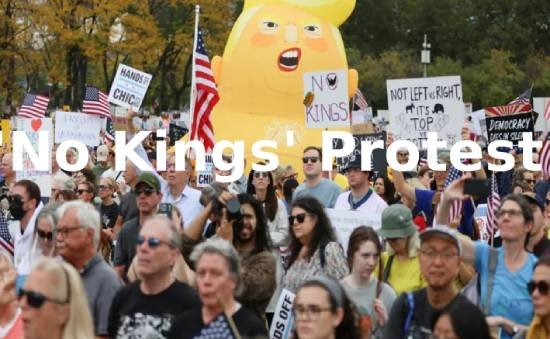
WASHINGTON D.C./LONDON – Thousands of protesters took to the streets across the United States and beyond in a significant wave of demonstrations against President Donald Trump. The coordinated global protests, organized under the banner “No Kings,” saw large gatherings from Washington D.C. to London, reflecting widespread public discontent with the Trump administration’s policies.
The primary grievances cited by organizers and participants revolve around Trump’s approaches to migration, education, and national security. It is estimated that over 2,600 protests are taking place worldwide, indicating that the movement is not confined to the United States.
Protesters Decry “Dictatorial” Tendencies
A central theme of the demonstrations is the accusation that Trump’s policies are dictatorial. Rallies were held outside the U.S. Embassy in London, with parallel protests in Spanish cities like Madrid and Barcelona, showcasing the global nature of the anger directed at the U.S. president.
Leah Greenberg, co-founder of the activist group Indivisible, which is involved in the protests, stated, “We don’t have kings in this country. That is the whole idea of America. The ‘No Kings’ protest is a way for people to push back openly. We will not allow authoritarian tendencies to grow, which is why we are protesting peacefully.”
Trump’s Response and the Protesters’ Display
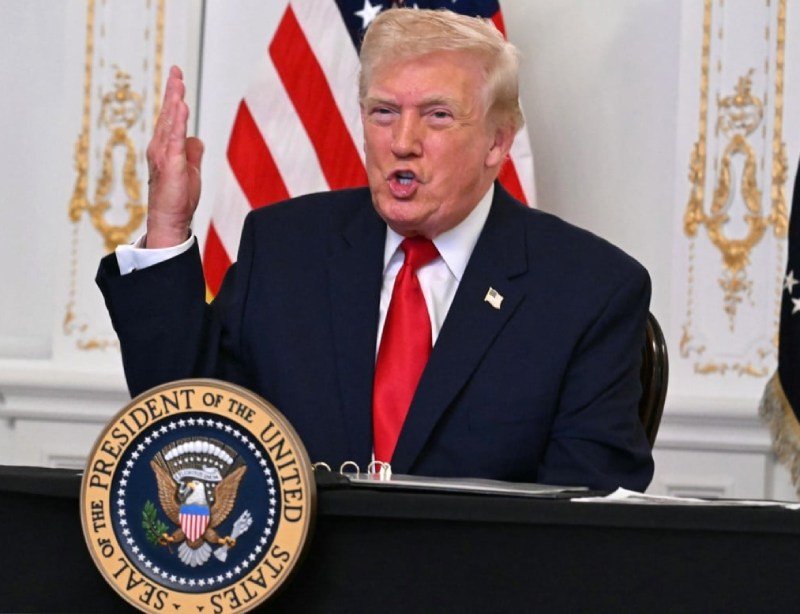
While Donald Trump has not publicly reacted to this specific wave of protests, he addressed similar criticisms in a recent interview, saying, “I am not a king, but I’m being called one.”
In Washington D.C., protesters were seen wearing various costumes and holding banners with anti-Trump slogans. In Pennsylvania, demonstrators organized a march. The movement has gained support from over 300 organizations.
Roots of the Discontent
The surge in protests is attributed to several controversial actions by the Trump administration, including:
- The recent U.S. government shutdown.
- The tightening of immigration policies.
- The cutting of funding to universities that expressed support for Palestine, a move critics say threatens diversity of thought and academic freedom.
Critics argue that these steps are socially divisive and pose a growing threat to the foundational principles of democracy.