U.N. Chief Calls for Reform as Economic Power Shifts to the Developing World
UNITED NATIONS, January 15, 2026 (BNN Web Staff)-
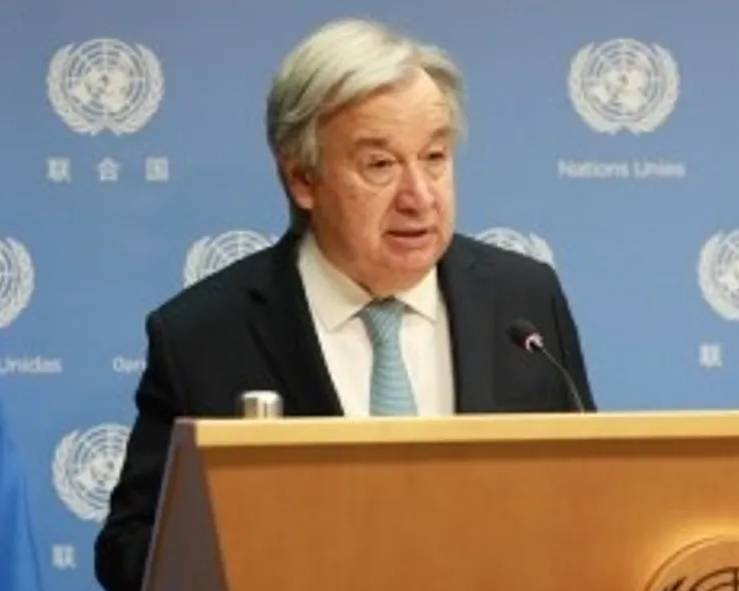
United Nations Secretary-General António Guterres declared on Thursday that the accelerating economic growth of developing nations compared to developed ones demands urgent reforms to the U.N. Security Council (UNSC) and international financial institutions.
“Every day, the share of developed economies in the global GDP slowly diminishes,” Guterres stated. “Every day, emerging economies are growing in size, strength, and influence. Every day, South-South trade moves further ahead of North-North trade.”
He argued that “our structures must reflect this changing world,” asserting that the systems that worked in 1945—when the U.N. and major global financial bodies were founded—cannot solve the problems of 2026.
The Secretary-General emphasized that reforming the Security Council is as essential as updating the power structures of international financial institutions.
The Data Behind the Shift
The call for reform is backed by hard economic data. According to the U.N.’s World Economic Report released this month, developing economies grew by 4.2 percent last year, significantly outpacing the 2.9 percent growth of developed nations.
The report highlighted India—which has presented its case for a permanent seat on a reformed Security Council—as the world’s fastest-growing major economy last year, expanding by 7.4 percent.
A Final Push for Renewal
The address was Guterres’s final annual speech on priorities to the General Assembly during his tenure, as he completes his second term this year. While acknowledging global crises straining international cooperation, he also pointed to positive signs.
“Let’s acknowledge that even in this turmoil, we have carved out space for the United Nations in areas where its presence was not guaranteed before,” he said.
Notably, Guterres did not name the United States or Russia—both permanent Security Council members frequently accused of violating international law and the U.N. Charter, and of using their veto power to paralyze the council.
“Some, through their actions, seem intent on moving us toward the end of cooperation,” he cautioned, stating they are “shaking the foundations of global collaboration and testing the limits of multilateralism.” He firmly added, “I assure you: We will not give up.”
Without directly naming the U.S., Guterres also referenced the financial crisis facing the U.N., stemming from Washington’s failure to pay its assessed contributions under the U.N. Charter. His speech underscored a pivotal moment for global governance, urging it to catch up with a new economic reality.