Dubai (UAE), May 6, 2026, BNN Web Staff: The United Nations has raised serious concern over what it describes as a rapidly escalating humanitarian emergency in the Persian Gulf, where an estimated 20,000 seafarers are stranded on vessels amid ongoing geopolitical tensions, restricted navigation, and heightened security threats.
According to a CNN report, the crisis has emerged after severe disruptions to maritime movement through the Strait of Hormuz, a key global shipping corridor.
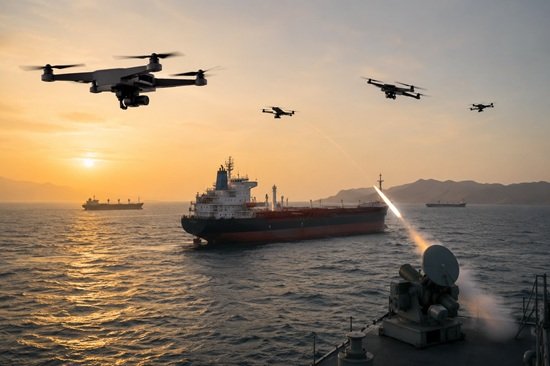
The situation has left hundreds of ships immobilised, with crews unable to disembark due to a combination of naval restrictions, port access barriers, and escalating risks from drones and naval mines.
Damien Chevallier, who heads the Maritime Safety Division at the International Maritime Organization (IMO), described the situation as without precedent in modern shipping history.
He said nearly 20,000 seafarers have been stuck in the region for weeks, calling it a “humanitarian crisis of extraordinary scale” and warning that the industry has not previously faced such a prolonged standstill.
The disruption stems from a widening geopolitical standoff in the region, where tightened maritime controls and countermeasures have sharply reduced vessel movement.
Reports suggest that between 800 and 1,000 ships are currently waiting for clearance or safe passage, while many remain unable to leave due to security risks and administrative restrictions.
Among the affected vessels is the Aurora, a sanctioned oil tanker linked to Iran’s so-called shadow fleet.
The ship’s predominantly Indian crew has reportedly faced shortages of essential supplies, including food and drinking water, as conditions deteriorate onboard.
Maritime union representatives, including the International Transport Workers’ Federation (ITF), have warned that the crisis is no longer just about delays, but a growing pattern of crew abandonment. In several cases, sailors are reportedly unpaid for months, while facing pressure and intimidation from ship operators.
The UK’s maritime monitoring body, the United Kingdom Maritime Trade Operations (UKMTO), has also received distress alerts from stranded crews describing unsafe and worsening onboard conditions. Some vessels have reportedly come under direct threat, including drone strikes while anchored in exposed waters.
In one of the most alarming accounts, seafarers aboard the Aurora alleged they were accused by the vessel’s owner of sabotage after requesting repatriation. In contrast, crew members insist they are simply seeking safe return amid an increasingly volatile environment.
Despite limited evacuations through neighbouring routes such as Oman, thousands of sailors remain stuck at sea with no clear timeline for relief.
In separate accounts, stranded crew members have described extreme survival conditions, including attempts to reuse condensed water from ship systems due to shortages onboard.
For many, the crisis has become a symbol of the hidden human cost of maritime conflict.
As one captain stranded in the region put it, the fear is no longer the ocean itself, but the unpredictability of modern warfare unfolding around commercial shipping lanes.
“I am not a warrior, I am a seafarer,” he said, stressing that crews are increasingly exposed to dangers far beyond traditional maritime risks.
The UN has urged immediate international coordination to prevent further deterioration of the situation, warning that prolonged inaction could deepen what is already one of the most severe maritime labour crises in recent years.