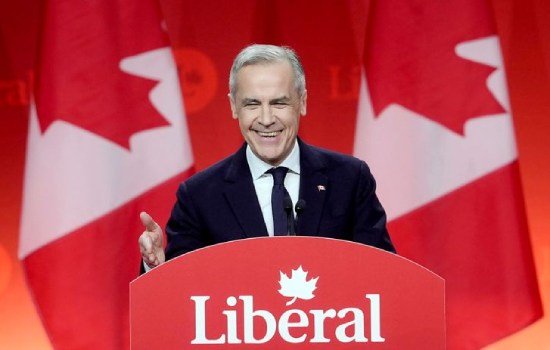
PM Carney Averts Political Crisis as Canadian Government Survives Key Budget Votes
OTTAWA – Prime Minister Mark Carney’s minority Liberal (Canadian) government has narrowly averted a snap winter election, surviving two crucial confidence votes on its federal budget this week. The high-stakes political victory clears the way for tens of billions in new spending aimed at bolstering a slowing economy.
The government passed the second of three budget votes on Friday, overcoming the hurdle of a hung parliament. The success was secured after members of the opposition Conservative Party broke ranks to support the Liberal plan, highlighting deepening fissures within the rival camp.
A Budget For “Uncertain Times”
Tabled by Finance Minister François-Philippe Champagne on Tuesday, the budget frames its expansive spending as a necessary response to a domestic economic slowdown and an ongoing trade dispute with the United States.
“The level of uncertainty is higher than what we have seen and felt for generations,” Champagne told lawmakers, justifying the government’s decision to embrace a larger deficit. “Bold and swift action is needed.”
The financial plan projects a deficit of C$78.3 billion for 2025-26, a significant increase from the previous estimate of C$42.2 billion. The government has earmarked these funds for what it calls “generational investments” designed to reshape the Canadian economy, with a goal to reduce the deficit to C$56.6 billion by 2029-30.
The Political Maneuvering That Secured Victory
The path to victory was fraught. Entering the week, the Liberals held 169 seats—three short of the majority needed to pass the budget and survive the confidence vote, raising the specter of a Christmas-period election.
The political deadlock was broken by a series of dramatic developments:
A Stunning Defection: Conservative MP Chris d’Entremont from Nova Scotia crossed the floor to join the Liberals, publicly criticizing Conservative leader Pierre Poilievre’s leadership and suggesting other party members were equally discontent.
A Strategic Resignation: Shortly after, Conservative MP Matt Jeneroux unexpectedly resigned, citing family reasons. The move fueled speculation that he was also in discussions with Carney’s team, a theory echoed by Government whip Mark Gerretsen, who stated, “There’s no way this is just a coincidence.”
Carney’s Central Banker Pedigree Pays Off
Prime Minister Carney, a former Governor of the Bank of Canada and the Bank of England, has leveraged his reputation as an economic manager to build bridges across the aisle. While he has traditionally positioned himself above partisan fray, he has shown a newfound pragmatism.
“I will speak to anyone publicly or otherwise who might support our legislative goals,” Carney told reporters, signaling his willingness to negotiate.
According to Lori Turnbull, director of Dalhousie University’s School of Public Administration, Carney’s economic focus resonates with moderate conservatives. “They have a lot in common with Carney,” she noted, suggesting his approach is key to his survival in a minority parliament.
The budget now proceeds to a final vote expected in mid-November, granting Prime Minister Carney a crucial respite and a mandate to advance his ambitious economic agenda.